Film & music
One picture. Three different feelings.
A small listening experiment about creative direction.
By Jay Fan · · Interactive listening experiment
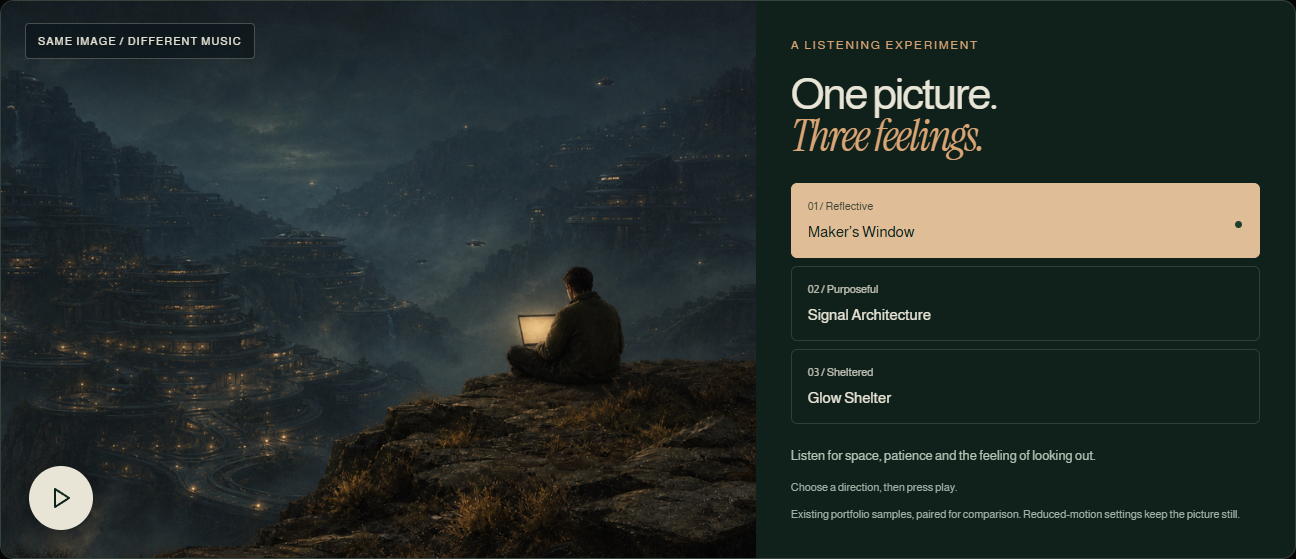
Music changes what we expect from a scene. A calm image can feel reflective, purposeful or weightless depending on the arrangement beneath it. This experiment makes that choice audible instead of asking you to trust a description.
The workflow
- Choose: Keep the same moving image.
- Listen: Compare three music directions.
- Decide: Name what supports the story.
- Refine: Write and mix to the actual brief.
Change one thing at a time
The experiment keeps a silent portfolio image sequence and switches the music. Each selection restarts the same opening, making the comparison repeatable. These are existing listening samples selected for contrast, not newly composed alternatives to a client soundtrack.
Give a music brief useful constraints
A brief should describe the role of the music, where speech needs space, its energy curve and the intended ending. Tempo, instrumentation and vocal direction help translate that intention into a repeatable generation or composition session. A genre name on its own leaves too much unspecified.
Keep the selection human
AI-assisted generation can make it cheap to explore several directions. Selection still means listening for phrasing, awkward transitions, vocal clarity and whether the cue belongs with the picture. The two vocal songs in the main listening room remain separate works with their own identity.
Finish for the medium
A theme song, a background bed and a seamless game loop are different deliverables. A good excerpt does not establish a clean loop or a finished voiceover mix. Set the intended duration and use, inspect the export, and review the chosen model and output rights for the actual release.
Make creative options directly comparable, then refine the one that serves the intended scene.
Scope & status
Portfolio comparison only. Existing tracks are reused here; no claim is made that they were commissioned for this visual.
The interactive examples are available with JavaScript enabled.
Discuss a project with JayKeep exploring
Knowledge & AI
From a model to a tool you can use.
Model setup is the beginning. A usable deployment also needs a repeatable workflow, visible progress and an export someone can use.
Film & music
A brand story, assembled shot by shot.
A practical production sequence for turning a business idea into moving images, narration and a coherent final edit.